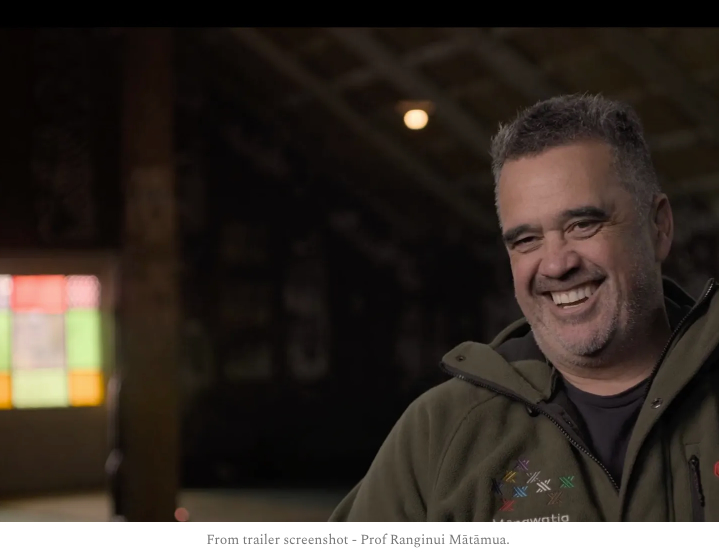

Early in the trailer on a New Zealand documentary screening for the first time this week (July 10) the doco star, one Professor Rangi Mātāmua, is asked why he is going to Antarctica.
Mātāmua explains that on his grandfather’s deathbed he was given a 400-page book on Māori star lore. This is tribal knowledge, said Mātāmua. It is tapu. But his grandfather replied “knowledge that isn’t shared isn’t knowledge.” This, says Mātāmua, has been his mantra ever since.
Mātāmua decided to share this knowledge by travelling to Antarctica with a film crew and taking part in a one-hour documentary - funded by the New Zealand taxpayer, because costs that aren’t shared aren’t costs. Not really.
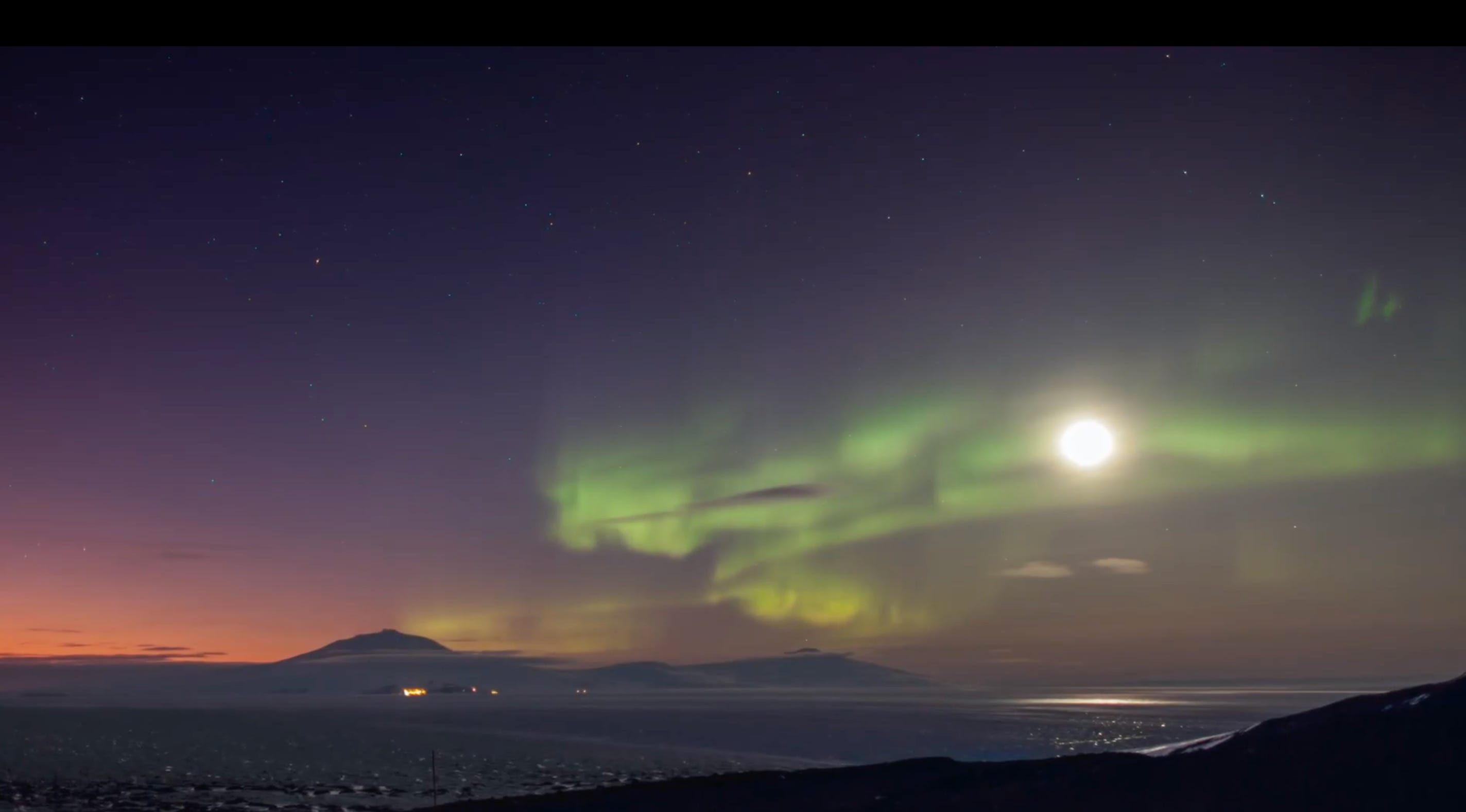
Who can blame him? Or his mentee, Mataia Keepa, a man lucky enough to accompany him and the film crew on this journey? Their excitement is palpable in the giggly, slightly goofy, exchanges between one another as they don protective gear before stepping outside and marvelling at the dark winking Antarctic sky. Wooooah.
But there’s more to this expedition than gauche bubbles of boyish enthusiasm. There’s poetic depth and serious purpose.
“Our ancestors did some things that were absolutely mind-blowing. They came to Aotearoa and named things.”
“It’s audacious what we are doing … but our ancestors were audacious.”
“ I don’t feel fear, I feel excited but I also understand the magnitude of what we are doing."
“We say that Tāne climbed into the heavens to get knowledge.Those journeys not knowing what you are going to find are the most rewarding.”
Then the big question:
“Is Mātauranga Māori only for Aotearoa or is it for Māori wherever we go?”
The blurb accompanying the film Ranganui: Call of the Ice raises even bigger questions, although they are presented as fact. It says:
“Tangata Māori (Māori people) have a long association with Antarctica and both astronomers whakapapa (trace their genealogy) directly to historic Antarctic adventurers Tamarereti and Hui te Rangiora. They drew on these connections while in Antarctica, recalling and revisiting the icons’ journeys.”
If only it were true. The inconvenient truth is that these remarkable claims have already been thoroughly debunked by respected Māori scholars.
FOUR YEARS AGO I wrote in the NZ Listener about a research paper that claimed Māori may have voyaged into Antarctic waters at least 1000 years before Europeans. This was big news at the time since it shattered the record of the previous first sighting of the frozen continent by a Russian ship in 1820. It made headlines around the world and was reported by the likes of The Guardian, the New York Times, CNN and NBC.
Maybe too big because the report’s authors then attempted a kind of back-track. They said they did not intend to popularise what they saw as an imperial narrative of people discovering new land. It wasn’t about which humans were in Antarctica but about “linkages that have gone on for many hundreds of years and will go on into the future.”
The author, Dr Priscilla Wehi and her research team, went on to write a paper arguing for a stronger case for future indigenous management of Antarctica.
But the damage was done. The myth had been created. The fact that a few months later a group of distinguished Māori scholars, including Sir Tipene O’Regan, wrote a report condemning this research failed to make similar headlines, even though the title was a proper zinger.
Understandable, said the lead author of that critique, archaeologist and Emeritus Professor at the Australian National University, Atholl Anderson (Ngai Tahu). He put the lack of response down to the disproportionate appeal of the new. New claims in science typically receive a great deal of attention, he said. Responses debunking claims tend to be ignored.
Wehi refused to talk to me at the time but wrote in an email that “our articles take narratives of connection as their starting point.”
But Wehi’s stories placed unexamined narratives of early Polynesian voyaging alongside records of historical Antarctic voyaging “as if the two sources have the same historiographical status i.e. as if traditional stories can be regarded without qualification as historical records.”
Anderson and his team were astounded by Wehi’s claims.
“As we say in academia, extraordinary claims require extraordinary evidence.”
Wehi’s account accepts narratives that describe long voyages in the Pacific by Hui Te Rangiora and his crew on the vessel Te Iwi o Atea, likely in the early seventh century. They sailed between islands and further south and “in doing so they were likely the first humans to set eyes on Antarctic waters and perhaps the continent.” Wehi’s paper finds supporting evidence in the name Te tai-uka-a-pia for the sea meaning after the manner of pia or arrowroot which when scraped looks like snow.
Her account of pre-European Polynesians sailing to and from Antarctica stemmed from translations of Rarotongan traditions written down in the 1860s.
Anderson’s team calculates that given Hui Te Rangiora occurred in Rarotonga whakapapa 48 generations before the late 19th century, that would place him in the fifth century AD, about seven centuries before the initial colonisation of New Zealand. Thus he could not have been Māori or even East Polynesian.
Other references such as the canoe being built of men’s bones indicate the story was likely to be more mythic or legendary as an origin story than historical as a voyaging narrative. Te tai-uka refers more plausibly to white caps or sea foam than to sea ice.
The practicalities of sailing a double-hulled canoe with fragile pandanus sails, 5000 km from Rarotonga and back, were also dismissed. Canoes designed for tropical conditions would have risked breaking up, overturning or foundering in the heavy seas of the circumpolar westerly wind belt. Their crews had no adequate protection against polar weather.
In addition, there is a lack of archaeological evidence for the claims. There are early Māori archaeological sites on Rakiura, the Snares as well as Enderby Island, the northernmost of the Auckland Islands, but an absence of archaeological evidence further south suggests Polynesian exploration did not reach the southern limits of the sub-polar zone.
However researchers have found other links with Māori on Antartica. It appears that 700-year-old soot found on the icy continent harks back to the time when early Māori used fire for land clearing.
This revelation was not welcomed by all. At the time this made news, Wehi said it was an example of helicopter science - research which is led and conducted by those who live and work far from the subject of their work, is currently under scrutiny in the research community.
As recently as 2025 Anderson and two other colleagues looked again at the likelihood of indigenous long-distance voyaging below 50° South and found little evidence for it. In a 2026 report in the Journal of Island and Coastal Archeology they concluded that environmental barriers were too substantial, prior to the arrival of square-rigged sailing vessels, for long-distance voyaging below 50°S.
But in order to justify this doco and unlock funding, Professor Rangi Mātāmua and co have successfully perpetuated the false narrative of early Maori voyaging to the ice.
Mātāmua is not solely to blame. Many were happy to support him. Their own PR blurb tells us Antarctica New Zealand was proud to host Professor Rangi Mātāmua FRSNZ ONZM (Tūhoe; Massey University) and his mentee Mataia Keepa (Ngāti Rārua, Ngāti Maniapoto, Te Arawa), as they travelled to the ice during winter 2025 to study the Antarctic skies.
“Professor Mātāmua became a household name in New Zealand in 2021, when he led the campaign to make Matariki (the Māori New Year) a public holiday. He has since won the title of Te Pou Whakarae o Aotearoa | New Zealander of the Year and was made an officer of the New Zealand Order of Merit in 2024, among many other notable achievements.”
Their Antarctic Science Platform research project was called ‘Kura hau awatea, kura hau pō, Southern Skies’ – K879A. Solar halo displays are frequent in Antarctica; Māori know this as ‘kura hau awatea’ for the halo around the sun and the halo around the moon as ‘kura hau pō’.
The film recently took home the award for Best New Zealand Cinematography at the Doc Edge Awards.
The documentary has been included in the Doc Edge Festival 2026 and premieres in Auckland on Friday, 10 July. A slightly shorter version of the film will screen on TV One at 9am 12 July, TVNZ+, and www.rnz/video from 13 July.