
×

What are you looking for?

Subscribe to
Platform Plus for
enhanced access
and features

MORE

Luxon Finds Merit In Treaty Principles After All

February 23rd, 2026

Councillor Refuses To Kowtow To Marae Protocol

February 2nd, 2026

Hipkins Revives Failed 2023 Election Tactics

January 21st, 2026

Is This Is A Bullying Letter From The Manukau Urban Maori Authority?

December 8th, 2025

The Irony Of Relativism

December 7th, 2025

Hard Choices.

December 4th, 2025

Stanford Redeems Herself With Reverse Ferret

November 17th, 2025

Bad Police Work

November 17th, 2025

Do You See It Yet?

November 17th, 2025

Heretics In The Temple Of Educational Orthodoxy

November 11th, 2025

Your Opinion Matters

Open.
Tolerant.
Free.
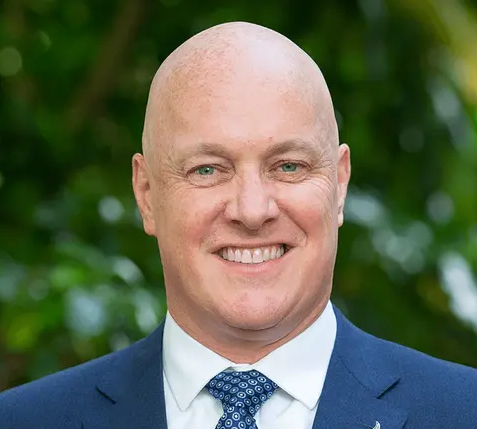
Luxon Finds Merit In Treaty Principles After All

PM echoing Seymour’s views flies under the radar.
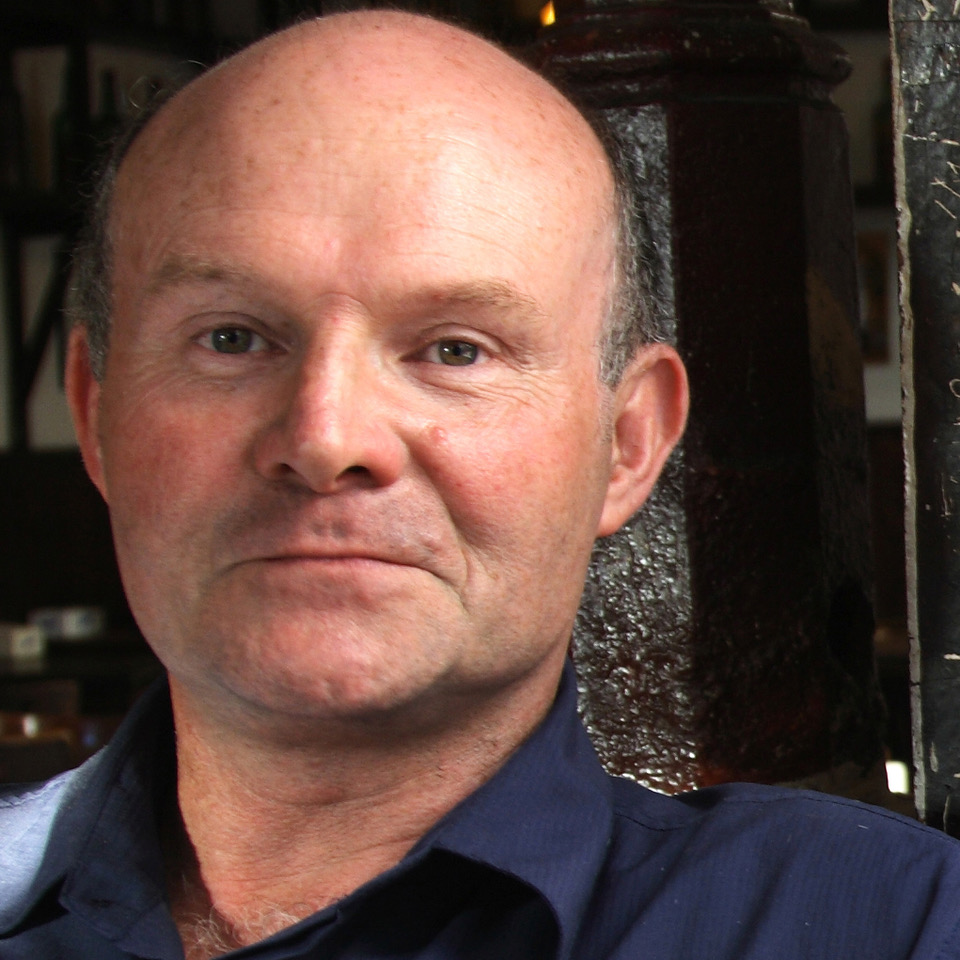
Graham Adams
Contributing Writer
February 23rd, 2026

Ever since David Seymour’s Treaty Principles Bill was defeated in Parliament last April he has promised his campaign for “equal rights for all citizens” would be back on the political agenda for this year’s election.

He is certainly doggedly keeping the memory of the bill alive. He mentioned it in his State of the Nation speech on February 15; in his address at Waitangi on February 5; and on the same day in a column in Wellington’s The Post, in which he restated the proposed articles with a reminder that each had received significantly more support than opposition in polls at the time. 

At Waitangi, he described the voting down of the bill as a “pyrrhic victory”, adding, “Many significant bills in our history were defeated several times before they became the way things always were. The principles themselves remain strong and popular.”

He has nominated homosexual law reform and euthanasia as examples of polarising issues that gained acceptance over time, with both topics ultimately succeeding on their third introduction to Parliament. 

The exact shape of Seymour’s renewed attempt to convert more New Zealanders to his way of thinking on the Treaty is yet to be revealed but he has received an oblique endorsement of the principles in his bill from a surprising source — the Prime Minister. 

Christopher Luxon has long been deeply hostile to the Treaty Principles Bill yet his own summation of the Treaty’s three articles in his speech at Waitangi sounded as if Seymour might have written it himself.

Despite Luxon’s speech being a significant attempt to stake out National’s position on Treaty issues in an election year, it has gone largely unremarked in the legacy media. The most obvious sign that the usual critics had finally woken up to its existence came in a column last week by law academic Carwyn Jones published on Māori current affairs site E-Tangata — 10 days after the speech had been delivered.

Jones’s article (titled “What the PM said at Waitangi was wrong”) began: “When the Prime Minister, Christopher Luxon, spoke at Waitangi last week, he set out a terribly distorted view of the country’s founding document, Te Tiriti o Waitangi.”

Jones rejected Luxon’s assertion that the chiefs had ceded full sovereignty to the Crown in Article 1; objected to him reducing tino rangatiratanga in Article 2 to protection of “property rights”; and chided him for interpreting Article 3 to mean, “We are all equal in the eyes of the state.” 

Rather, Jones argued for special rights for Māori, arguing that Article 3 is a promise they would enjoy “all the rights and privileges of British subjects” that are “in addition to, not instead of, the promise of tino rangatiratanga”.

As you’d expect, Luxon’s apparent Road to Waitangi conversion did not go unnoticed by Seymour himself. In a media scrum at Waitangi, Act’s leader was happy to point out the significance of the Prime Minister’s words.

When asked what a revival of the Treaty Principles Bill might look like, Seymour avoided answering the question directly. Instead, he said he had listened to the Prime Minister’s speech and “his idea of the three principles is the same as the Treaty Principles Bill”. 

“And so you get people, including him, who are opposed to the bill but they don’t actually oppose the principles. And that’s why I say in the long term it will be the law of the land.” 

A journalist asked Seymour why the bill “needs to be revisited” if it’s caused as much harm to government-Māori relations as the Prime Minister reckons.

Seymour: “Well, that may be [Luxon’s] view, but I’m not here to do his political management. I’m here to advance the simple idea that our Treaty gives each of us one five-millionth of the opportunity this country has to offer. 

“I just come back to the fundamental fact that New Zealanders actually are equal and that’s why sooner or later those principles will succeed [and] that the law will one day reflect that.”

Responding to media questions at Waitangi himself, Luxon emphasised that the Treaty Principles Bill had been “killed”. However, after listening to his speech, it is obvious his opposition to the proposed principles isn’t because he objects to them per se; rather, he strongly objects to them being codified in law. 

That stance seems to be a case of simply not wanting to buy a political fight. And it’s true that whenever Luxon is asked why he is so vehemently opposed to the bill, he never goes further than saying it is “divisive”.

His Waitangi speech seems to have been an attempt to recalibrate National’s official position on the Treaty in the hope of countering a widespread perception of lack of action on race-based policy and Maorification. If so, it has to be classed as a failure given it has attracted so little public attention. 

Even his bold declaration that Article Three “must guarantee equality of opportunity” but “cannot — and should not — guarantee equality of outcomes, because that, frankly, is socialism” failed to fire in the media.

As did his assertion that when someone arrives at hospital or needs urgent care, they should not be asked about their whakapapa but about clinical need.

The problem for National is that many of its would-be voters have already dismissed the party as not being committed to fulfilling the mandate it won in 2023 to reverse the tide of Māori exceptionalism — whether in government bureaucracies, nursing, teaching, law or elsewhere. 

It can rightfully boast that the government overturned Three Waters and the Māori Health Authority soon after winning power in 2023 but its other successes — notably National’s Paul Goldsmith dramatically tightening the Marine and Coastal Area Act — have gone mostly unremarked.

Luxon personally has little credibility on these issues. When he was asked by The Platform’s Sean Plunket at a post-Cabinet press conference in November 2024 what he liked or disliked about the Treaty Principles Bill, he replied: “There isn’t anything I like.” 

That sour, dismissive statement effectively put him on the side of the Toitū te Tiriti protesters who had marched on Parliament.

It doesn’t help him, or National, that last September his Finance minister, Nicola Willis, told business leaders taking part in the NZ Herald’s Mood of the Boardroom survey that if National been able to govern alone, or close to it, since 2023, “I think you would have seen less focus on Māori-related issues.” 

Nor does the fact Erica Stanford had to be dragged kicking and screaming to remove the existing Treaty clause in the Education and Training Act 2020 which required school boards to give effect to Te Tiriti. And in December 2024, Judith Collins introduced the Gene Technology Bill that creates a Māori Advisory Committee to deal with any genetic modification proposal that might affect native species.

Act and NZ First are very happy, of course, to fill the policy gap Luxon and his ministerial colleagues have left for them in the run-up to the election. 

Winston Peters has already announced he will be campaigning for a referendum to abolish the Māori seats and David Seymour will continue to remind the electorate that the essence of his Treaty Principles Bill is not entirely dead, but merely resting and awaiting a rosy resurrection in due course. He has acknowledged that Act peaked too early in 2023 and he is no doubt waiting for the best time to reveal his hand before November’s election for maximum impact.

The unfortunate fact for Luxon is that he has already been outgunned by Peters and Seymour. His speech at Waitangi can only be seen as a weak and doomed attempt to convince sceptical National voters that he is seriously committed to addressing their concerns about the march of Maorification.

All he has managed is to hand Seymour a win — and raise the uncomfortable question of why his Deputy Prime Minister exhibits significantly more political courage than him.

ENDS

Graham Adams is a freelance editor, journalist and columnist. He lives on Auckland’s North Shore.