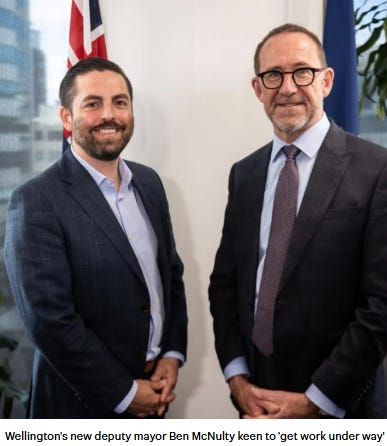

The latest thespian to act as if he’s outraged about public service wastage of ratepayer and taxpayer money is the Wellington City Council’s Deputy Mayor, Ben McNulty.
Ben has apparently just found out that his Council paid Journey Digital, a proudly Woke Auckland-based IT outfit, $600,000 to create a website for Wellington’s new library.
Deputy Ben McN has claimed, “’A developer on Fiverr could have built something similar for 1/40th of the cost”. For good measure, Journey Digital also charged an additional $72,000 in the last year, for hosting and maintenance of the website. To all intents and purposes, Journey Digital has lucratively captured the Council’s bewildering library website.
https://www.tematapihi.govt.nz/
At any time in Ben McNulty’s almost four year stint as a Councillor he could’ve corralled his fellow Councillors into fighting the Capital City Council’s out-of-control spending. But he’s never honestly cared.
In relation to the Journey Digital Joke, an anonymous “spokesperson” for the Council announced:
“We appreciate it represents a significant amount and that the current council has set very clear expectations that all spending must reflect the council’s current financial state along with the public’s expectations about careful cost control to keep rates rises as low as possible. A thorough procurement process was undertaken for this work, with final contract spend approved by the chief operating officer, and Journey Digital was the successful vendor.”
Approver of Journey Digital’s website heist, Wellington Council’s Chief Operating Officer, is James Roberts.
If Wellington’s Councillors really cared about Wellington’s ratepayers, it would demand that the Council’s CEO Matt Prosser rid ratepayers of James Roberts, and if Pommie Imposter Prosser doesn’t do that, the Council should give him his marching orders too.
Wellington’s library has been a vast, bottomless cesspit of Council waste. The Council spent $220 million on needless earthquake strengthening of the library to 100% of the earthquake code (whatever that’s supposed to mean). The Council spent almost $200,000 on the opening function for the renovated library. Mayor Little, in another act of performative penny-pinching, claims to have halved the original library opening budget of $400,000.
The Council doesn’t miss a trick when it comes to squandering ratepayers’ money. Another eternal bonfire of cash is the earthquake strengthening of the Town Hall, a building that should’ve been demolished long ago. So far, the Council has blown $180 million on the upgrade, and expects to spend at least that amount again, before its merry dance around that cash-fueled fire pit ends.
But Wellington is not content to limit its largesse to long-suffering Wellingtonians. It’s sharing its love of bounteous banknote bonfires with all New Zealanders…
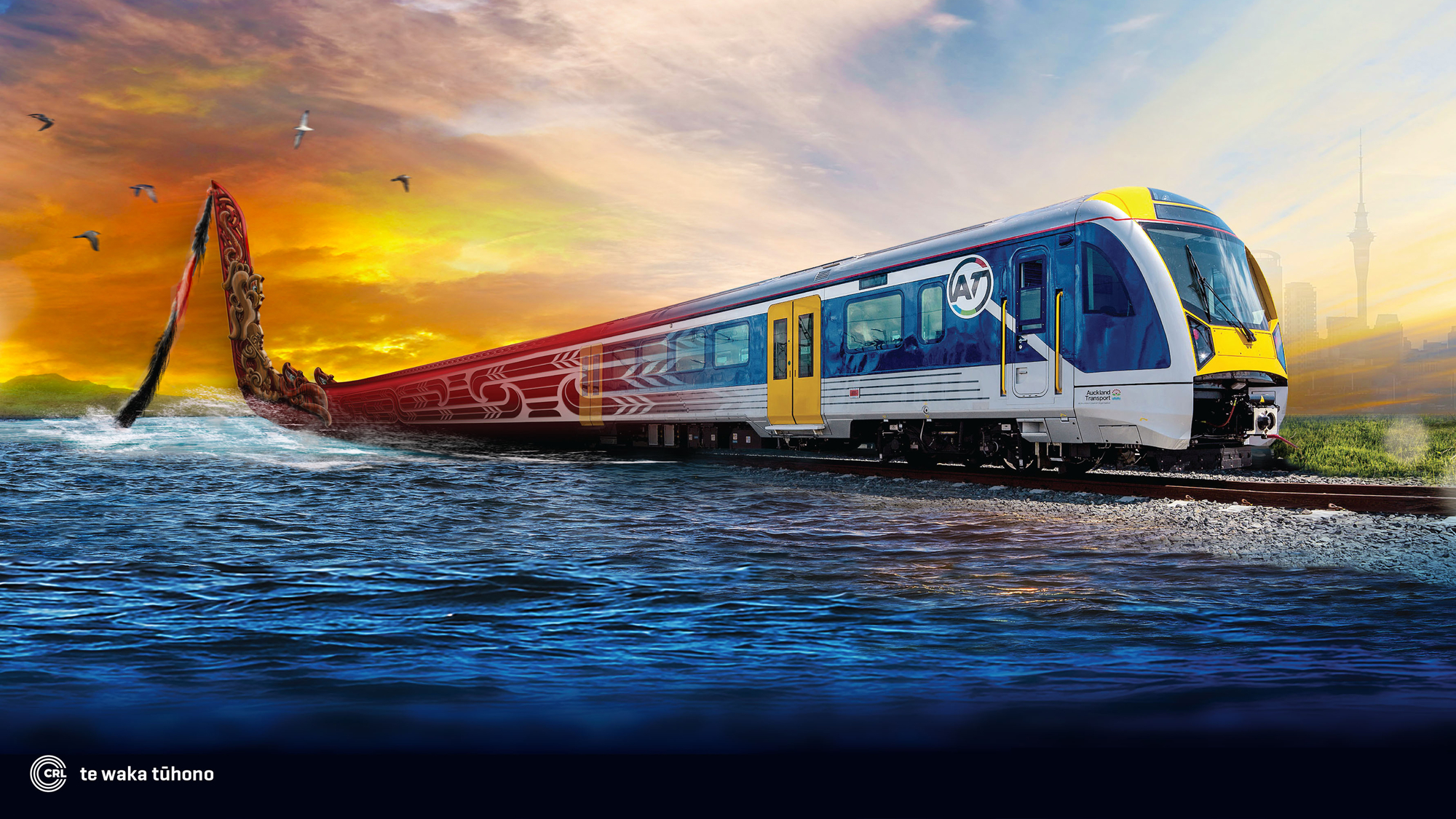
A 4.5km raised causeway between Petone and Ngauranga is now complete. The Māori name for the causeway is Te Ara Tupua, a name said to have been gifted by a man named Kura Moeahu.
How Mr Moeahu came to think he owned that name in the first place, in order to be entitled to gift it, is a mystery.
The causeway comprises a shared walking/cycling path and lots of rocks to protect the path, railway line and State Highway 2 from erosion by Wellington Harbour seawater and wave action. There’s also a preposterously over-engineered overbridge, complete with ornate Māori motifs.
The causeway cost $350 million, twice its budgeted cost. That’s $77.5 million per km - $77,500 for each meter.
The Crown (taxpayers), directly and through its National Land Transport Fund, paid $343 million for the causeway. The Wellington City and Regional Councils paid $7 million.
The munificently rewarded engineering and construction firms, who surely can’t believe their luck, were Downer, HEB Construction and Tonkin & Taylor. Withholding of the commercial arrangements, on grounds of “commercial sensitivity”, means the paying public have no way of knowing how or why those firms managed to get themselves paid double what was originally budgeted and what they had agreed to receive.
All this profligate spending begs the question of whether New Zealand’s Auditor-Generals have been properly performing their crucial role. NZ’s current State Auditor is Grant Taylor, appointed for a seven year term from 3 July 2025. Aunty Granty is a good bastard. His Taylor-made role under the Public Audit Act 2001 includes (quoting from section 16 of that legislation) to:
“examine -
the extent to which a public entity is carrying out its activities effectively and efficiently:
any act or omission of a public entity, in order to determine whether waste has resulted or may have resulted or may result:
any act or omission showing or appearing to show a lack of probity or financial prudence by a public entity or 1 or more of its members, office holders, and employees”
Given the chronically wasteful and spendthrift nature of the public service and local government in New Zealand, the Auditor-General has no shortage of public entities warranting examination under section 16.
An excellent target for Grant Taylor’s immediate attentions is Tiaki Wai Limited. Word is that Tiaki Wai is bound to pay Maori $50,000 per year for its name.
Tiaki Wai is set to become responsible for the Wellington region’s drinking water, wastewater and stormwater in less than a month’s time, on 1 July 2026. Wellington’s water company is a owned in equal shares by the Hutt City, Porirua, Upper Hutt, Wellington Regional and Wellington City Councils.
In its first year, Tiaki Wai expects to charge Wellington households about $2,500 each, for its “services”. Within the next ten years, Tiaki Wai intends to increase its annual charge per household to about $6,000. But of course, unchecked, Tiaki Wai’s extortionate charges will increase much more than that. I’ve touched on the terror of Tiaki Wai in previous pieces:
Tiaki Wai will be co-governed along racial lines, with a formal “Partners Agreement” and a “Partners Committee” that will include unpleasant Ngati Toa tribal leader Helmut Modlik and Kara Puketapu-Dentice.
Ngati Toa is the remnants of Te Rauparaha’s war party and subjugated wahine, ejected from the Waikato in the 1820s. Kara is the head of an organisation that represents descendants of a group of disparate Maori individuals who fled Taranaki for Wellington in the 1820’s and 30’s. What happened to Wellington’s original Maori population is unclear. Long since digested, I guess.
Tiaki Wai’s constitution is specifically designed to interfere with proper democratic accountability of Tiaki Wai’s board to its Council shareholders. In a conventional company governance structure, each shareholding Council would appoint a director to Tiaki Wai’s board. But under Tiaki Wai’s constitution, Tiaki Wai’s “Partners Committee” appoints Tiaki Wai’s directors. This brings in the Maori tribal Partners, fudges the board’s responsibility to the Council shareholders and creates a distinct risk of the Tiaki Wai Board becoming an insular, self-appointing Wellington Water Commissariat.
Career Blobocrat and Tiaki Wai chairman Will Peet has been penning all manner of piffle in defence of Tiaki Wai. But Tiaki Wai is already a bloated, self-important, dysfunctional, rent-seeking monopoly - a ravenous corporate water monster that will, without preventative action, only get worse.
Fortunately, by virtue of being a Council-controlled organisation, Tiaki Wai can and should be immediately examined by the Auditor-General, for its ineffectiveness and inefficiency, waste, and lack of probity and financial prudence.
In April, the Commerce Commission announced that it’s investigating Tiaki Waiki’s foreshadowed charging. That’s a good start, but the Commission should immediately move to exercise its statutory powers to restrict and otherwise regulate Tiaki Wai’s charges. Ubiquitous unaccountable utilities are rorting ordinary New Zealanders and skinning the general populace to the bone.