
×

What are you looking for?

Subscribe to
Platform Plus for
enhanced access
and features

MORE opinion

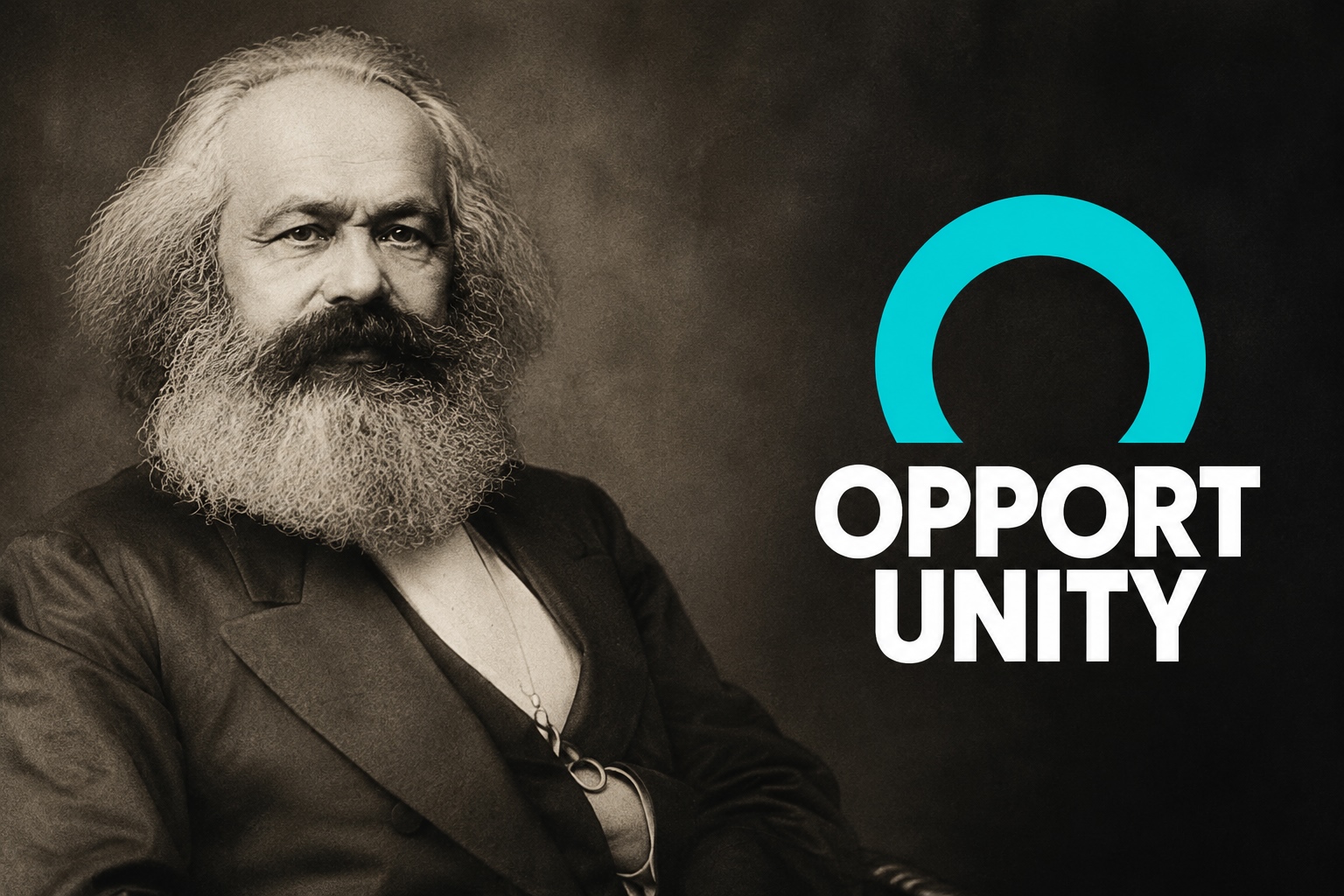
The Opportunity Party - A Radical Left Policy Manifesto

August 6th, 2026
Labour Capital Gains Tax Is Actually a Tax On Inflation

July 30th, 2026

Twinkle Twinkle Little Star

July 15th, 2026
Frozen Myths

July 6th, 2026

Opportunity…

June 29th, 2026
The Constitutional Revolution New Zealand Pretends Is Not Happening

June 15th, 2026

Performative Parsimony

June 5th, 2026

Hipkins’ Policy Silence Doesn’t Matter

June 3rd, 2026

Lord Cooke’s Indictment

June 2nd, 2026

Sherman Tanks...

May 28th, 2026

Your Opinion Matters

Open.
Tolerant.
Free.

The Opportunity Party - A Radical Left Policy Manifesto

Karl Marx would find much to admire in aspects of TOP’s policy manifesto.

Troy Bowker
Contributing Writer
August 6th, 2026

The audacity of the party to describe itself as centrist and moderate is, in some ways, impressive. That positioning, however, relies heavily on what appears to be a willing mainstream media environment that has devoted significant attention to TOP’s political story and leadership while providing comparatively limited scrutiny of the consequences of its actual policy platform.

Why has so much focus been placed on TOP’s rise, its leader and its political narrative, while there has been limited examination of the practical impacts of its proposed reforms?

It is difficult to avoid the conclusion that much of the mainstream media coverage has resembled political promotion rather than the objective analysis that voters should expect from professional journalists.

Let’s examine some of TOP’s more radical proposals.

The Citizen’s Income Cash Giveaway

TOP proposes a Citizen’s Income of $19,400 per adult per year regardless of your circumstances.

New Zealand currently spends approximately $50 billion per year on welfare payments, including New Zealand Superannuation (Treasury and Ministry of Social Development (MSD) fiscal reporting).

Providing $19,400 to every adult citizen would cost more than $80 billion per year. This is a close approximation based on:

● ~4.1 million adults in New Zealand (Stats NZ population estimates, 2024)
● 4.1 million × $19,400 ≈ $79.5 billion

Even if the existing welfare system were significantly reduced or replaced, the net additional cost would still likely be tens of billions of dollars annually.

New Zealand’s gross public debt is currently above $200 billion (Treasury, 2024 Half-Year Economic and Fiscal Update), much of it held offshore. In summary, we are mortgaged to the hilt to offshore lenders.

Beyond the financial cost, there are also questions about social and economic incentives. If every adult receives a guaranteed income regardless of whether they work, study or contribute economically, what impact would that have on workforce participation, ambition and productivity?

The scale of this lolly scramble is enormous. Along with the economic cost, it will create unintended negative consequences for incentives, labour supply, and long-term fiscal sustainability.

Tax the Family Home

TOP proposes funding part of its Citizen’s Income through major tax reform, including a national annual land value tax and changes to income tax rates. These proposals are drawn from TOP’s published “Tax Switch” policy framework.

The land tax is the most radical element of the package.

Unlike council rates (which fund local government services) or Labour’s proposed capital gains tax (which applies on realisation of gains), TOP’s proposed land tax would be an annual charge based solely on land value, regardless of income, cash flow or your individual circumstances.

The annual tax rate is 1.75% of land value per year (TOP policy documentation). This rate is the basis for the following illustrative calculations:

● $1,000,000 land value → ~$17,500 per year
● $800,000 land value → ~$14,000 per year

Importantly, the tax would apply to all land, including residential property. Family homeowners will be hit the hardest, as they are by far the biggest category of landowners in New Zealand.

The average Auckland land value is approximately $750,000 based on QV and CoreLogic’s median/average valuation data (2023–2024 estimates).

● $750,000 × 1.75% ≈ $13,125 per year

This is in addition to the already sky-high rates you pay annually.

TOP claims the policy intention is to promote housing affordability, but this ignores the fact that most households will need to find the extra thousands of dollars from their already squeezed budgets each year.

Home ownership will become less affordable — the exact opposite of what TOP says is their policy intent.

Tax and More Tax

These proposed land taxes would come on top of changes to income tax rates.

TOP’s policy is to adjust income tax brackets, but the exact net effect varies by income level and household composition. The following figures are approximate modelling estimates:

● $70,000 income → ~+$7,000 tax change (estimate based on TOP modelling assumptions)
● $100,000 income → ~+$8,000 tax change (estimate based on TOP modelling assumptions)

This raises an important question: would the average homeowner on an average income be financially better off once the Citizen’s Income is netted against new tax obligations? The answer for many is a hard no.

For many households — particularly retirees and long-term homeowners — the concern is not paper wealth but cash-flow affordability. A key issue is how many households would face liquidity pressure under an annual land-based tax system.

TOP proposes allowing some homeowners to defer payment until sale or estate settlement. However, deferral does not remove liability; it accumulates a large liability to be paid against the property on sale.

Economic Suicide for the Primary Sector

The implications for New Zealand’s productive economy also require careful consideration.

Agriculture and horticulture sectors often hold high-value land relative to annual cash income. Farm cash flow and profitability can vary significantly year to year, particularly under drought or commodity price volatility.

A land tax based on asset value rather than income could therefore create cash-flow mismatches, especially in low-profit years.

Unlike profit-based taxes, a land tax is payable regardless of business performance, which may increase financial pressure during downturns.

This will drive many of our food producers to the wall. And for a country relying on exports driven by food production, it amounts to economic suicide.

Justice Policy Concerns

There are also concerns with TOP’s approach to justice policy, particularly its stance on drug-related offending and youth crime. The proposal to effectively remove consequences for drug users, alongside a position that under-25s should not be prosecuted in the same way as older offenders, raises serious questions about accountability and deterrence. While rehabilitation and prevention are important components of any justice system, removing or significantly weakening consequences risks undermining public safety, weakening the rule of law, and sending the wrong signal about personal responsibility.

Robin Hood Rides Again

TOP’s proposal goes beyond incremental tax reform and represents a major redistribution of income and wealth through the state. Like in the Robin Hood tale, the money is literally taken from landowners and given to every citizen.

The debate is therefore not only about efficiency, but about the appropriate role of government in redistributing resources.

Several international comparisons include Denmark and Estonia (limited land/property taxation elements).

However, these systems differ significantly in structure, scale and purpose. Importantly, no OECD country currently operates a nationwide land value tax combined with a universal adult income of this magnitude.

It is not a minor adjustment to existing systems but a structural redesign of taxation and welfare.

The Debate New Zealand Needs

The discussion around TOP should move beyond personalities, polling and political branding.

Voters deserve transparent analysis of major policy proposals, including:

● fiscal cost (gross and net)
● distributional impacts
● behavioural incentives
● implementation risks

In my view, TOP’s Tax Reset represents a significant and high-risk policy experiment.

That is the debate that deserves far more rigorous and transparent attention from our media.

Article originally published on Troy Bowker's Substack

Troy Bowker is an investor with an interest in politics, sport and critical thinking.