
Anyone not rolling around clutching their sides laughing or miming sick noises into a bag will not like this review since I did both while watching this blatant piece of propaganda. Even my friend, a dedicated LWWW*, thought it was tosh.
To be honest, if that wasn’t your reaction, you either have no sense of humour or you have been utterly captured by the Māori wonderfulness brigade.
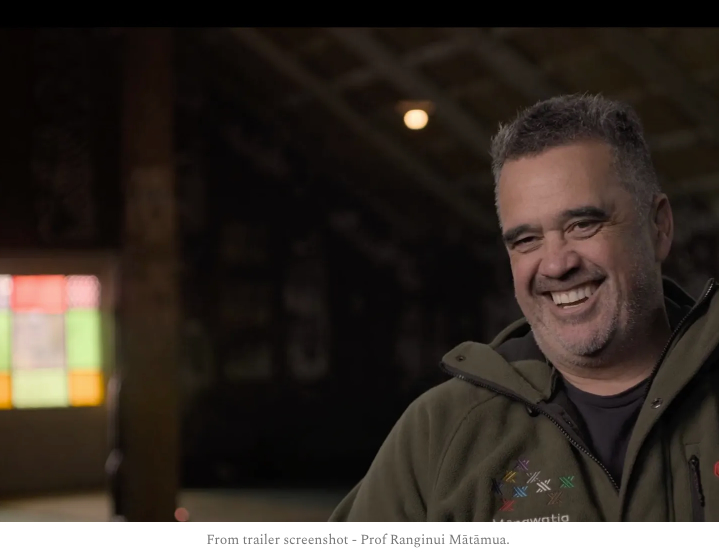
Producers Miriama Kamo and Julia Sartorio were obviously counting on the latter reaction by her audience to get this documentary over the line. Māori media funding organisation, Te Māngai Pāho, threw $400k at the doco while Māori scholar Professor Ranginui Mātāmua and his mentee Mataia Keepa, and presumably the film crew also, were hosted on the ice by Antarctic New Zealand.
Curiously though, close reading of other media reveals that Mātāmua and Keepa were already going to Antarctica when Kamo heard about their expedition. That’s when she apparently had “a lightbulb moment” after learning Mātāmua would be the first Māori academic to visit Antarctica. The two had worked together before on a book about our latest public holiday.
In many respects, Matariki has been the making of Ranginui Mātāmua. He led the campaign to make the Māori New Year a public holiday and has since won the title of New Zealander of the Year in 2023. In 2020 he was awarded the Prime Minister's Science Communications Prize from the Royal Society of New Zealand, a prize worth $100,000. In 2024 he was made an officer of the New Zealand Order of Merit. The doco was launched this Matariki weekend in Auckland and shown on TVNZ on Sunday 12 July.
The PR spin to market this hour-long ice fest highlighted the two protagonists’ connection to the Antarctic.
“Tangata Māori (Māori people) have a long association with Antarctica and both astronomers whakapapa (trace their genealogy) directly to historic Antarctic adventurers Tamarereti and Hui te Rangiora. They drew on these connections while in Antarctica, recalling and revisiting the icons’ journeys.”
This myth first pumped by a European female scholar in 2022 has been thoroughly debunked since then by respected Māori scholars. But why let truth get in the way of a good story and funding application?
Having watched the doco on Sunday, I am now even more confused. Mātāmua’s and Keepa’s connections to these adventurers was never mentioned. Not once. Despite the PR spin accompanying the release of this film, the doco never raises the possibility of early Māori voyaging to Antarctica.
Just as well. As recently as 2025 Māori scholar and Emeritus Professor Atholl Anderson and two other colleagues looked again at the likelihood of indigenous long-distance voyaging below 50° South and found little evidence for it.
Most of the first part of the documentary focusses on Mātāmua and his family, highlighting what an all-round good guy he is. In this section, he is literally kissing babies. The only bum note comes from his mother who recalls he had been a rascal in his youth but even that naughtiness is portrayed as endearing.
At one point Mātāmua says how fortunate he has been, that paths have just opened up for him, and given his progression in recent years, that’s a fair summation. He’s a dab hand at maxxing his status as an expert in all things Māori.
Somehow this status opened a pathway for him and his mate to travel to Antarctica. Why? asks Mātāmua’s mother, not unreasonably. “To be with the stars” they tell her. Is she thinking, as I did, but stars are everywhere?
Once there, Mātāmua and Keepa do ask bigger questions such as - “Is mātauranga Māori only for Aotearoa or is it for Māori wherever we go?”
It’s a shame no answers are forthcoming. Also this question could have been posed and examined by going to Australia say. Or Fiji. Or anywhere else easier to get to. There was absolutely no need to travel to Antarctica.
Once there we see the pair marvelling at the landscape and coming up with observations we’ve all heard before (the silence, the immensity, the darkness, the cold).
They also make up a few Māori words to describe the sea, snow and other natural phenomena. Important because we’ve already been told in reverential tones that their ancestors came to Aotearoa and “named things.” Now they have too. Cosmic, right?
This angle has huge potential. The world is now their naming oyster. What’s next for our intrepid pair? A trip to France to see if mātauranga Māori works its magic there? I can already see them sitting at a cafe tossing round Māori terms for baguette and camembert. Better still, this naming lark is a self-fulfilling proof that Māori is a living language.
As someone even more acerbic than my good self said:
“If inventing new terms in Te Reo counts as science, then the writers of Star Trek deserve a Nobel prize for coming up with Klingon.”
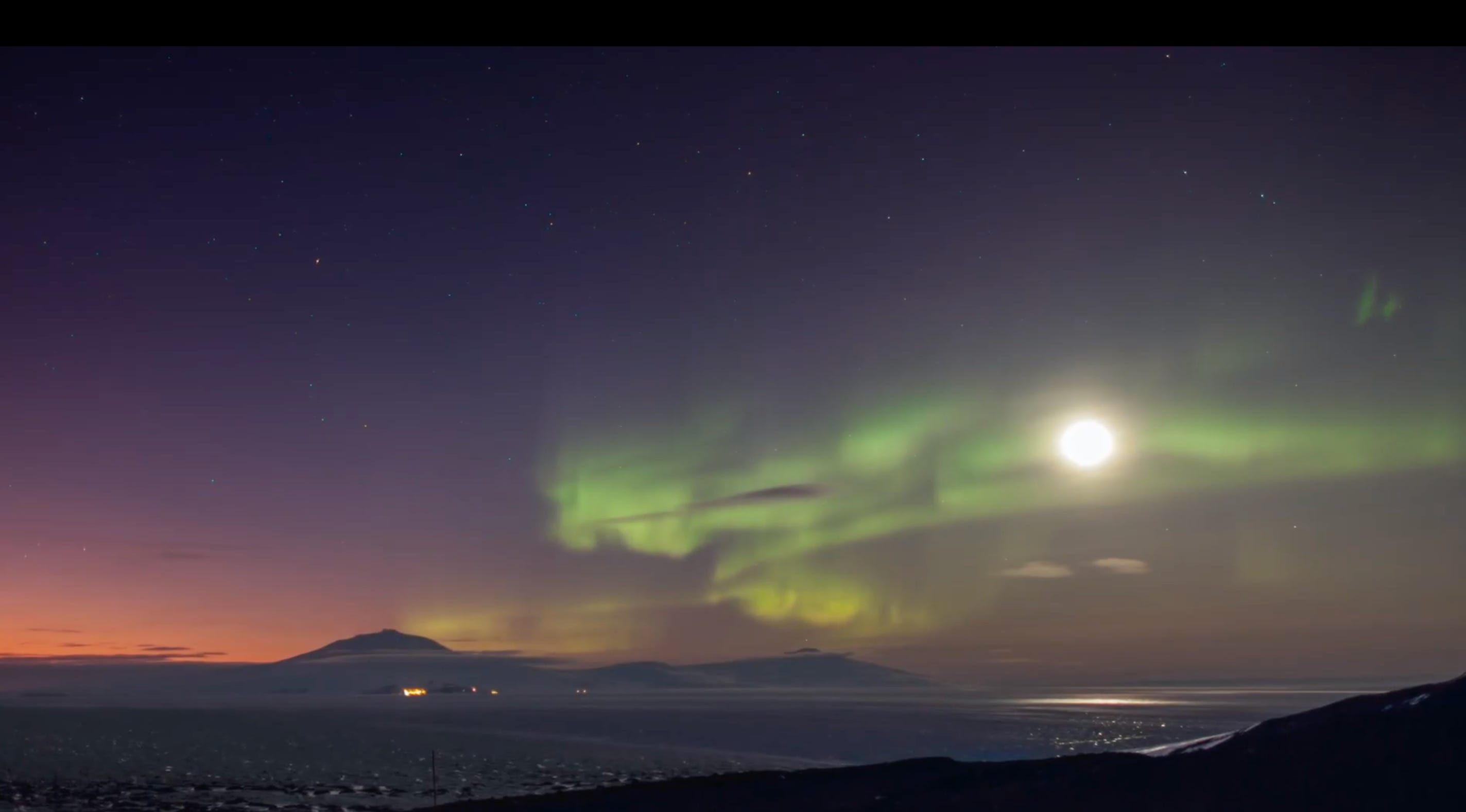
The cinematography does a lot of heavy lifting in this documentary, given the thinness of the storyline. The images of the New Zealand bush contrasted with the mysterious winter scenes of the icy continent are striking and memorable. No surprise that it won Best New Zealand Cinematography category at the Doc Edge Awards 2026.
The likely lads staring at the night sky leads to what Kamo has called “a standout moment.” That is the moment when Keepa remarks on the twinkling stars and tells us that their ancestors always said that when the stars are twinkling, a storm is on the way. Blow me down, if a storm doesn’t arrive and the crew are forced to stay longer on the ice. Proof of the wisdom of the ancients right there.
Except this expedition took place in winter. Detailed weather forecasts would have made up a substantial part of the planning given the risks to flights etc on the inhospitable ice. So the likelihood of this pair knowing that a storm was coming and then linking that to supposed ancient insights is, sorry to say, highly suspicious.
The PR spin accompanying this film claims it is about “where science and Indigenous knowledge meet in real time” even though this case is never successfully made in the film. Mātāmua is described as the first Māori academic to study the stars from Antarctica. But his specialty is Māori studies, not science, so there is some verbal trickery going on here.
Most egregious omission of all in the documentary is the 400-page book on Māori star lore given to Mātāmua by his grandfather on his deathbed. Given that it is the catalyst for this trip, you might imagine viewers would be given a sighting of this tapu tome. I, for one, was waiting for the big reveal since I can’t help but wonder how much this book was used to justify the insertion of Matariki as an official holiday by Jacinda Ardern.
But we’ll never know since no shot of the sacred tome is ever shown. Nothing. Not even a passing glimpse. The fact that this manuscript has never been sighted or peer reviewed by the academic community has been condemned by others. The Daily Telegraph article in the previous link points out that Mātāmua has effectively been installed as “the single source of truth” of this state-sponsored civic religion.
If this reads like an overreaction to an innocuous, albeit unconvincing, documentary, all I can in my defence is that I am reacting to the all-out assault on reality we are forced to endure at this time of year. I don’t like it when the intelligentsia, or anyone for that matter, tries to bully me into believing men can be women and I don’t like it when I’m fed fiction about the significance and sanctity of this new Māori holiday.
That’s fine for those willing to embrace this vision as the propaganda to embed Matariki into New Zealand culture gains traction in the education system and media. But for now, and while I can (not yet a heresy), I am sure I’m not the only one who says - count me out.
*Left-wing White Women